AI & Creativity

Chiang’s arguments revisited

Science fiction writer Ted Chiang has recently argued why AI cannot create art (Chiang, 2024). I recommend reading his article (and of course books!). I have proposed some counterarguments (Hernández-Fernández, 2025), which, like this text, are meant to provoke thought. Chiang’s arguments against AI’s artistic capabilities can be summarized as follows (Chiang, 2024; Hernández-Fernández, 2025):

  1. The Microdecision Argument – Art involves numerous conscious and unconscious decisions. Chiang argues that AI relies solely on statistical models and imitation, producing predictable and mediocre results, aligning with Wagensberg’s (2017) notion that the opposite of creativity is mediocrity.
  2. The Lack of Intentionality Argument – True art requires intention. Since AI has no emotions, intellectual joy, or desires, it cannot create with meaningful intent.
  3. The Effort and Process Argument – The creative process and effort are integral to artistic value. AI generates content effortlessly, which Chiang believes diminishes artistic worth.
  4. The General Intelligence and Efficiency Argument – AI struggles to acquire new skills efficiently compared to humans. Despite excelling at games like Go, it requires vast datasets, whereas humans learn more intuitively—key to artistic creation.
  5. The Lack of Originality Argument – AI is generative but not creative. Its outputs, built on automated mechanisms, lack true originality, resulting in statistically average work.

These points lead to discussions in classrooms and faculty meetings about art (and artistic education), raising counterarguments that may contribute to future research and debate (Hernández-Fernández, 2025):

a. AI and Artistic Microdecisions – While AI’s decisions are based on prior data and algorithms (with inherent biases), future advancements may allow AI to better replicate human artistic processes. This raises questions about hybrid human-AI creative interactions (microdecisions in prompting, in AI-human feedback, etc.).
b. Intentionality and Ethical Use of AI – While AI lacks intent, educators and artists can use it expressively through techniques like prompting (Hernández-Fernández & Ferrer-i-Cancho, 2023). Recognizing the link between technology and its usage is crucial to avoiding misconceptions of AI autonomy (Diéguez, 2024). Teachers play a key role in guiding students toward responsible and intentional creativity.
c. Optimizing Creative Effort – AI can handle repetitive technical tasks, allowing artists to focus on conceptual and creative aspects, much like how photography revolutionized cinema. AI may democratize digital creation, enabling users to generate software without coding knowledge to produce graphic works or 3D-printed pieces (Hernández-Fernández, 2023).
d. Sustainability and AI Efficiency in Art – While AI currently has a high environmental cost (Crawford, 2021), future sustainable developments may enable responsible integration into art education, fostering new creative processes.
e. Human-Machine Collaborative Creativity – AI can extend the boundaries of collaborative artistic creation. In education, AI could serve as a creative partner rather than merely a tool, reshaping artistic expression and innovation. Instead of dehumanizing art, this interaction may enhance it, reinforcing that creativity has always been shaped by external influences—including technology.


The recent “Ghibli effect” phenomenon, driven by AI, demonstrates how digital virality can democratize artistic expression, but it also forces us to reflect on the environmental impact of these processes, which require vast amounts of data and energy. While we celebrate AI’s ability to generate captivating Ghibli-style images, we must ask ourselves the real cost of this accelerated creativity: are we replacing human effort with unsustainable energy consumption?

Just as artists have long drawn inspiration from other humans, machines may now play a similar role. AI may not be creative in the human sense, but it is poised to become an invaluable tool in the creative process, expanding and redefining our understanding of creativity (Wingström et al., 2024) and reshaping both artistic production and education.

References

Chiang, T. (2024). Why A.I. Isn’t Going to Make Art. New Yorker, 31th August, 2024.

Crawford, K. (2021). Atlas of AI: power, politics, and the planetary costs of artificial intelligence. New Haven: Yale University Press.

Diéguez, A. (2024). Pensar la tecnología. Barcelona: Shackleton books.

Hernández-Fernández, A. (ed.) (2023). Creativitat digital. Barcelona: Iniciativa Digital Politècnica, colecció Diàlegs UPCArts. https://upcommons.upc.edu/handle/2117/395833

Hernández-Fernández, A. (2025). Inteligencia artificial y diseño. Grafica13(26), 265–288. https://doi.org/10.5565/rev/grafica.461

Hernández Fernández, A. i Ferrer Cancho, R. (2023). Lingüística quantitativa i lleis lingüístiques: de la lingüística a la intel·ligència artificial i la tecnoètica. Terminàlia, 27. https://doi.org/10.2436/20.2503.01.190

Holmes, W., Bialik, M., & Fadel, C. (2019). Artificial intelligence in education: promises and implications for teaching and learning. Center for Curriculum Redesign.

Wagensberg, J. (2017). Teoría de la creatividad. Barcelona: Tusquets.

Wingström, R., Hautala, J. y Lundman, R. (2024). Redefining creativity in the era of AI? Perspectives of computer scientists and new media artists. Creativity Research Journal, 36(2), pp. 177-193.
Digital Creativity

I have recently had the pleasure of editing a fantastic book on digital creativity. It is open access in Catalan here. Here I translate a small part of the text into English. Enjoy your creativity, digital or not!

‘Creativitat digital’ (2023)

Human creativity has always been linked to language (oral, gestural, or bodily) or technology. It is true that there can also be a kind of creativity, neither linguistic nor technological, strictly biological, biochemical, internal, in the sense that it occurs in a programmed way once life is already underway: this happens with mental, immaterial experiences, internal creations that thrive in the synapses of brains, which shape and generate ideas and imagination, and that we might perhaps call virtual. Likewise, perceptions of the external world stimulate and can provide new ingredients that are added to internal creativity. This internal creativity can manifest, or not, in actions that lead to external creativity.

This virtual creativity needs to be materialized, communicated, shared, externalized, to be evident, to exist outside. Perceptible creativity is thus inevitably social, linguistic, or technical; it arises when the imagined creations inside organisms emerge and are communicated, or else it does not exist beyond hedonism and the inner world of each being. To believe in it, we need the effect, the result of creativity; we cannot just focus on the cause. And a receiver is needed.

But what if we study, with neuroimaging techniques, the cause of creativity? In doing so, once again, we are invoking technology. We externalize internal creativity. One could also think that other biological processes, such as random genetic recombinations, which occur, for example, in sexual reproduction and contribute to our existence here and now, can show seemingly creative results. Like you, like me. In fact, they escaped human control until we developed biotechnologies, so there are already multiple biological phenomena that we can subject to our will… creative will? Nature is full of autonomous processes, biochemical or physical reactions, with results that may appear artistic or creative to human receptors, but they are not the product of creativity because there are no neural dynamics behind them.

ChatGPT in Education?

This work in Proceedings in “I Congreso Internacional de Educación, Innovación y Transferencia del conocimiento”: Congreso EduEmer 2023:

¿Didáctica con ChatGPT? Una propuesta ética y pedagógica (Full Spanish version)

Abstract

The recent emergence of artificial intelligence (AI) systems such as ChatGPT represents a conceptual revolution in education. The paradigm shift is imminent and disruptive, and should entail a rapid but considered reaction to the consequences of these technologies at both university and pre-university stages. Some ethics reflections and general didactic guidelines are proposed here, designed both for the creation and implementation of academic activities using AI, which require the reflective use of AI on three levels (teaching, learning and assessment), both from the perspective of the teacher and the student, in a bidirectional approach that fosters critical and ethical reflection, which is essential in technologically mediated educational processes.

Linguistic laws in Catalan: new book chapter

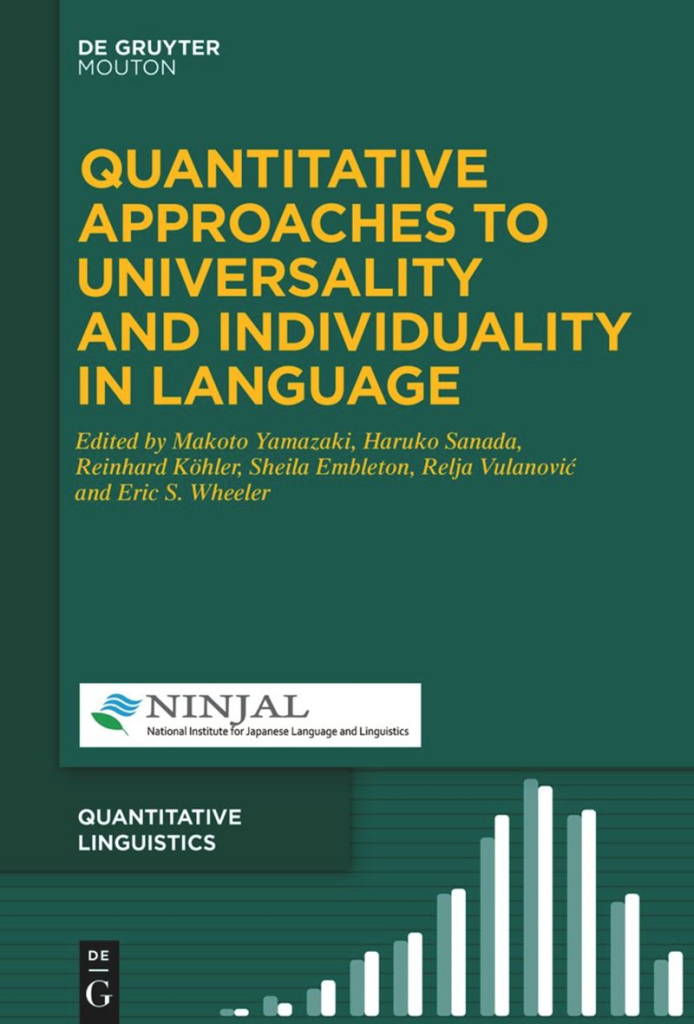
Quantitative Approaches to Universality and Individuality in Language
Edited by: Makoto Yamazaki , Haruko Sanada , Reinhard Köhler , Sheila Embleton , Relja Vulanović and Eric S. Wheeler
Volume 75 in the series Quantitative Linguistics [QL]
https://doi.org/10.1515/9783110763560

Linguistic laws in Catalan

From the book Quantitative Approaches to Universality and Individuality in Language

  • Antoni Hernández-Fernández , Juan María Garrido , Bartolo Luque and Iván González Torre

Quantitative linguistic research reveals fascinating patterns in contemporary and historical linguistic data. The book offers insights from a broad range of languages, including Japanese, Slovene and Catalan. The reader is convinced that statistic empirical analysis – and increasingly also machine learning and big data – should be an essential part of any serious linguistic enquiry.

En aquest capítol de llibre hem fet una revisió de les principals lleis lingüístiques (Zipf, Menzerath-Altmann, Heaps-Herdan…) en diferents nivells lingüístics (fonemes, paraules, grups de respiració) presents en el català oral i escrit (corpus Glissando).

Here abstract in English: Linguistic laws in Catalan (degruyter.com)

Lingvistica cantitativa. Statistica cuvintelor

Our book about Quantitative Linguistics, now in Romanian! “Lingvistica cantitativa. Statistica cuvintelor.” 🙂

Volumul 39. Mari idei ale matematicii. Lingvistica cantitativa. Statistica cuvintelor, de Toni Hernández, Ramon Ferrer i Cancho | Non Fictiune – Educatie & Cultura Generala | Litera.ro

“Quantitative Linguistics” by Toni Hernández and Ramon Ferrer i Cancho, our book now in Romanian!

New project on the semantics of Catalan

Societat Catalana de Tecnologia.

The study of language laws, ie the statistical regularities found in languages, is a basic research that has determined some general patterns and models with potential applications, as well as the improvement of language technologies based on computer systems. In the case of Catalan, a general characterization of the language was initiated previously in both written and oral corpora.

This new project, founded by Institut d’Estudis Catalans, aims to focus on the clinical applications of quantitative linguistics, in two levels:

– A first previous theoretical level, where mathematical models are studied to characterize the semantics, and in return the syntax, of Catalan words, based on known corpora and the normative dictionary (DIEC2).

– A level of application, to extend the clinical applications of the statistical study of the Catalan language, in aphasia, dementia or other pathologies.

Speech pause distribution as an early marker for Alzheimer’s disease

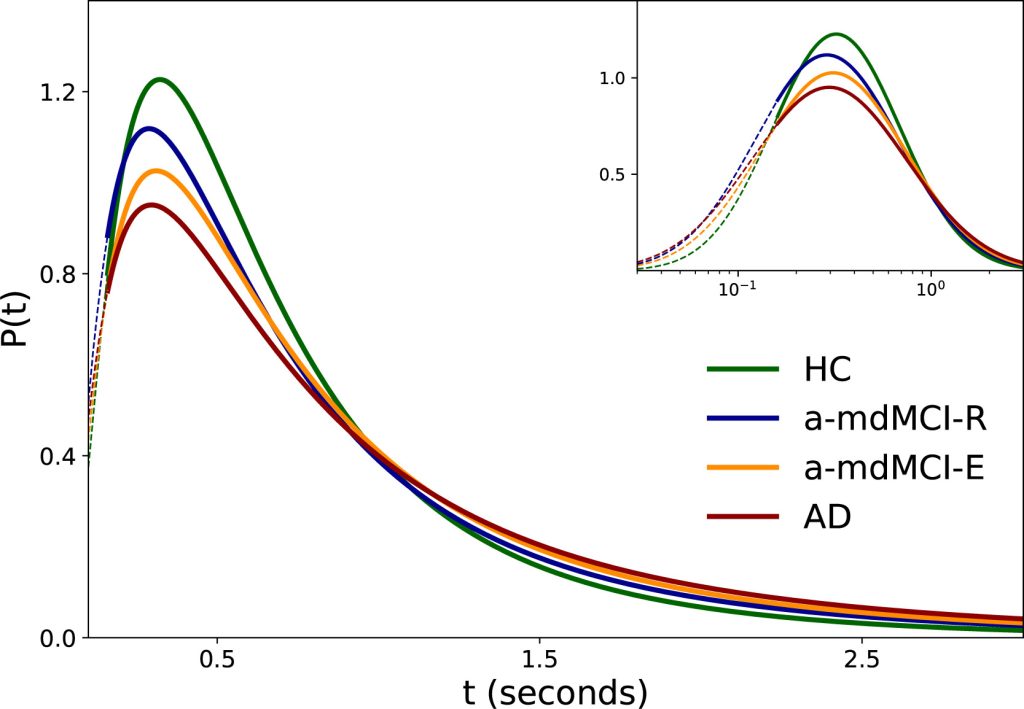
Pause duration analysis is a common feature in the study of discourse in Alzheimer’s disease (AD) since this patient group has shown a consistent trend for longer pauses in comparison to healthy controls. This speech feature may also be helpful for early detection; however, studies involving patients at the pre-clinical, high-risk phase of amnestic mild cognitive impairment (aMCI) have yielded varying results. Here we use Quantitative Linguistics to establish a new early marker for Alzheimer’s disease: speech pause distribution.

Speech pause distribution as an early marker for Alzheimer’s disease – ScienceDirect

Highlights

  • Pause duration distribution differentiates two groups with MCI (Mild Cognitive Impairment) at risk of AD (Alzheimer’s Disease).
  • Lognormal distribution explains distribution of pause duration; differentiates clinical groups.
  • Principled statistical framework for estimation of optimal minimal pause duration threshold.
  • Characterization of probability density distribution of speech pause durations in MCI and AD.

About education…

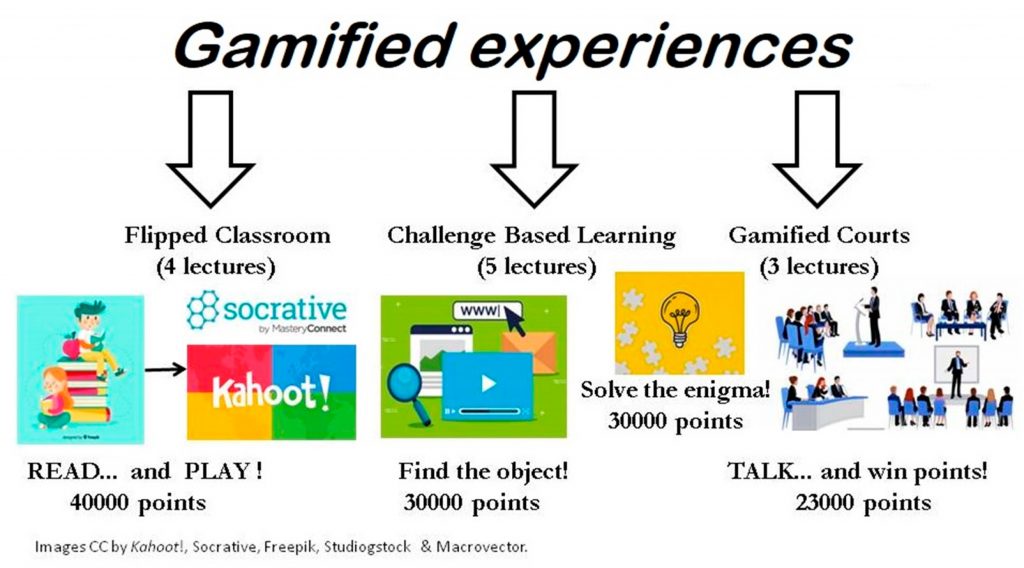
I leave here two recent reflections on education. The first is an article published in a Special Issue of Sustainability (MDPI) on “Smart Educational Games and Gamification Systems in Online Learning Environments”. This is a field study in which the effects of gamification were assessed in two groups of master’s degree students over three courses: Is Classroom Gamification Opposed to Performance?

The results show that there is a negative correlation between the numerical scores of the different components of the evaluation and the marks obtained in the activities of gamification. The group less involved in the gamification obtained better academic results, although gamification improved the motivation and the valuations of the subject, due to the inclusion of more games in the course. This raises doubts on whether the positive effects of gamification on the climate of the classroom and on motivation are opposed to academic results.

Summary of gamified experiences in Hernández-Fernández, Olmedo and Peña (2020).

Then I leave you here the link to a talk (in Catalan) about “Telematics education under debate: myths and certainties”. If someone needs materials about it, you can contact me!