Human language is a system of communication. Communication, in turn, consists primarily of information transmission. Writing about the interactions between information and natural language, we cannot fail to mention that information theory has originated with statistical investigations of English text in the turn of the 1940s and 1950s. This book consists of twelve contributions that cover various recent research areas at the interface of information theory and linguistics.
Our contribution to this book:
Linguistic laws in speech: The case of Catalan and Spanish.
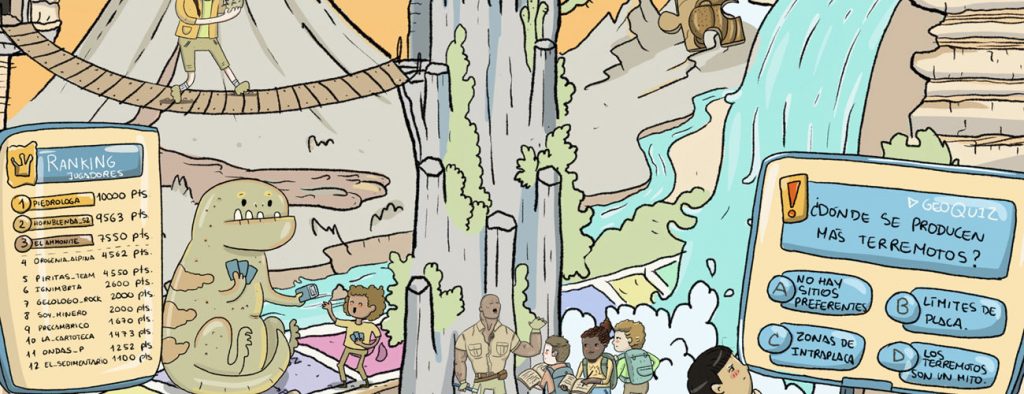
Special issue about gamification (also ‘ludification’, from Latin ‘ludus’, play), in the Journal “Enseñanza de las Ciencias de la Tierra” (in Spanish):
Evaluate with games. Tools and methods for a diversified assessment in gamification
This paper presents some tools and methodological considerations about assessment through gamified activities and tools. More specifically, the mix of dynamics and different elements of gamification will be reviewed with aim to achieve greater attention to student diversity in the evaluation. To this end, it is exposed by examples how to achieve a complete assessment of the student through the combined use of student response systems (Kahoot!, Socrative, Plickers,…), Challenge-Based Learning, collaborative games, oral presentations and small projects that use scoring systems, badges and other recognition systems that, in a simple way, allow teachers a diversified assessment of student competencies that goes beyond the mere qualifications and exams, that can also be part of a gamified evaluation.
Lo
bueno, si breve, dos vezes bueno;
y aun
lo malo, si poco, no tan malo.
“‘Oráculo manual y arte de prudencia’ ” (1647),
Baltasar Gracián
The COVID-19 pandemic has caused the greatest disruption in education systems in the history of Humanity, according to the report of this August 2020 from the United Nations. It points to an impact of 94% of the world’s students, with about 1.6 billion students from almost two hundred countries in which schools have been closed. At best there has been a sudden and uneven leap into distance education. At worst, the most vulnerable students have been disconnected from the education system.
This brief United Nations report is highly recommended for all teachers to read, as it adds to the well-known preventive health considerations (masks, hand hygiene, distance, classroom ventilation …), others referring to coordination between the different agents of the educational community (teachers, students and families) and the fundamental importance of political and institutional action, unfortunately in some cases of slow response and oblivious to scientific recommendations.
However, I would like here to add some considerations regarding four crucial pedagogical elements: Access, Context, Didactics and Creativity (ACDC). It is not about the rock group of the Young brothers and company going to pedagogy (although some of their songs can stimulate us in our particular Highway to Hell), but let me explain what these ACDC considerations consist of:
Access
Access to online education was a priority for most administrations after the confinement and closure of educational centers. And it was logical that this should be the case, because without the Internet, and without computers or mobile devices (and without electricity in many corners of the Global Village), communication between teachers, students and families was practically impossible. Now, as we will see, the mere access that technology provides, although necessary, is not enough for online education. It is simply a necessary condition in which the role of public administrations and schools is crucial so as not to leave anyone out of the educational system. Providing electronic devices and guaranteeing the internet connection of the most disadvantaged is a priority. The role of teachers here has been to detect these cases and try to mediate with their superiors to solve these dramatic disconnections. I know teachers who, in the most critical moments of last March, went far beyond their functions by leaving personal devices, taking laptops from the centers to the students ‘homes and even helping their students’ internet connectivity. But that’s not the point: this is where schools should report and administrations (local and state) respond. Lack of access is undoubtedly the pillar of inequality.
Context However, the fact that a student has access to the internet does not imply that the conditions are in place for them to learn. The pandemic has shown that face-to-face teaching provides, in addition to access to education, an adequate context for learning. That is why face-to-face presence is key and many efforts are being made to return to it: it is in the classroom where teachers can control that there is a favorable pedagogical climate, a safe context and environment, actually basic conditions for education. Now, let’s place ourselves in a learning context of blended learning.
The blended learning implies that periodically we can contact our students directly. Some face-to-face classes are given in which the tasks to be carried out should be planned remotely (supplying the appropriate pedagogical materials, with detailed instructions for families, especially in nursery and primary education), correcting the work posed, solving the doubts that have arisen , explain those especially complex contents and evaluate.
The face-to-face classes are going to be worth their weight in gold, so each teacher must assess their context and prioritize what they do in them.
It is important to review what students have learned and tasks done remotely. Also plan the activities for the days when we will not see them. However, the fundamental thing about these face-to-face classes is to maintain the bond with our students.
This emotional bond can be maintained online, yes, but the presence helps to alleviate two of the biggest drawbacks of distance learning: the lack of self-discipline when there are no established schedules and the socializing encounter with classmates.
In distance learning, the context remains at the mercy of the students’ daily reality. Hopefully, they will be well fed and who will follow healthy schedules and routines for their age, with an appropriate corner for study, with parents or guardians who can help them with their homework, who can follow the instructions that the teacher will have provided; But there will also be those who, far from having domestic help, will find their problems when, despite access, it will be difficult for them to follow a distance course.
In the latter case, it is about those students for whom the school is a sanctuary, the only place that guarantees them to have some medium-term opportunity, students for whom we must raise the flag of presence.
Didactics Although we constantly complain about time, most of us teachers hook up. The ideal is not to give up any content. Education is based on them, on what we explain.
But now, in a pandemic situation like the current one, we must select the most important content. Or be concise in exposing our matter. Perhaps there are parts of our subjects that do not result in what we expected. A good teacher notices when a class has gone bad. Let’s minimize them. We do not insist on what does not work even presentially.
Feedback, corrections and instructions after the exercises is crucial. If after the effort of your students your answer is simply a numerical grade, perhaps followed by a “very good”, what do students learn from it? It is preferable to put fewer activities but spend more time on feedback, assessing the positive aspects and showing which parts of those evidences are incorrect or could be improved.
We must also give clear indications, information and feedback from the follow-up, to parents or tutors who have become in many cases our domestic correspondents.
In this didactic sense, a small blackboard or a piece of paper allows us to explain exercises or make corrections remotely to a whole connected group, solving doubts and avoiding many hours of individual emails or videoconferences. You can prepare paper dossiers or digital activity sets (with their corresponding links). Resorting to textbooks can be another solution for teachers: they centralize activities, and contain an alternative explanation to the teacher that the students and their families appreciate so much.
Creativity In problematic situations our creativity emerges. Let them tell the management teams by setting up classrooms in unsuspected corners, bubble groups, placing hydroalcoholic gels and coping with the Tetris of the course schedules; to teachers rethinking their subjects, contemplating the three scenarios (remote, blended or with masks in the center); the students communicating at untimely hours to solve that strange exercise, searching online for materials for a project that they can do with the tools at home, or writing an original text for the demanding language teacher; and family members organizing to face the challenge of schooling in times of a pandemic.
I wish you a Creative return to the classroom. First, ensuring Access, Context and Didactics. It is our role. Maybe with some ACDC song in the background, motivating and that we get involved in this unusual return to school. Some Rock & Roll will do us good.
After a very interesting talk by Manlio De Domenico, soon in UBICS-Complexitat channel, here is a link where you will find an informative, but very comprehensive, introduction to complex systems: https://complexityexplained.github.io/
Don't miss the free booklet...
CatalàEnglishEspañol
...and many other languages in the website!
* This project is released under CC BY-NC-ND 4.0 License. Please cite: M. De Domenico, D. Brockmann, C. Camargo, C. Gershenson, D. Goldsmith, S. Jeschonnek, L. Kay, S. Nichele, J.R. Nicolás, T. Schmickl, M. Stella, J. Brandoff, A.J. Martínez Salinas, H. Sayama. Complexity Explained (2019). DOI 10.17605/OSF.IO/TQGNW
” Complexity science, also called complex systems science, studies how a large collection of components – locally interacting with each other at small scales – can spontaneously self-organize to exhibit non-trivial global structures and behaviors at larger scales, often without external intervention, central authorities or leaders. The properties of the collection may not be understood or predicted from the full knowledge of its constituents alone. Such a collection is called a complex system and it requires new mathematical frameworks and scientific methodologies for its investigation.”
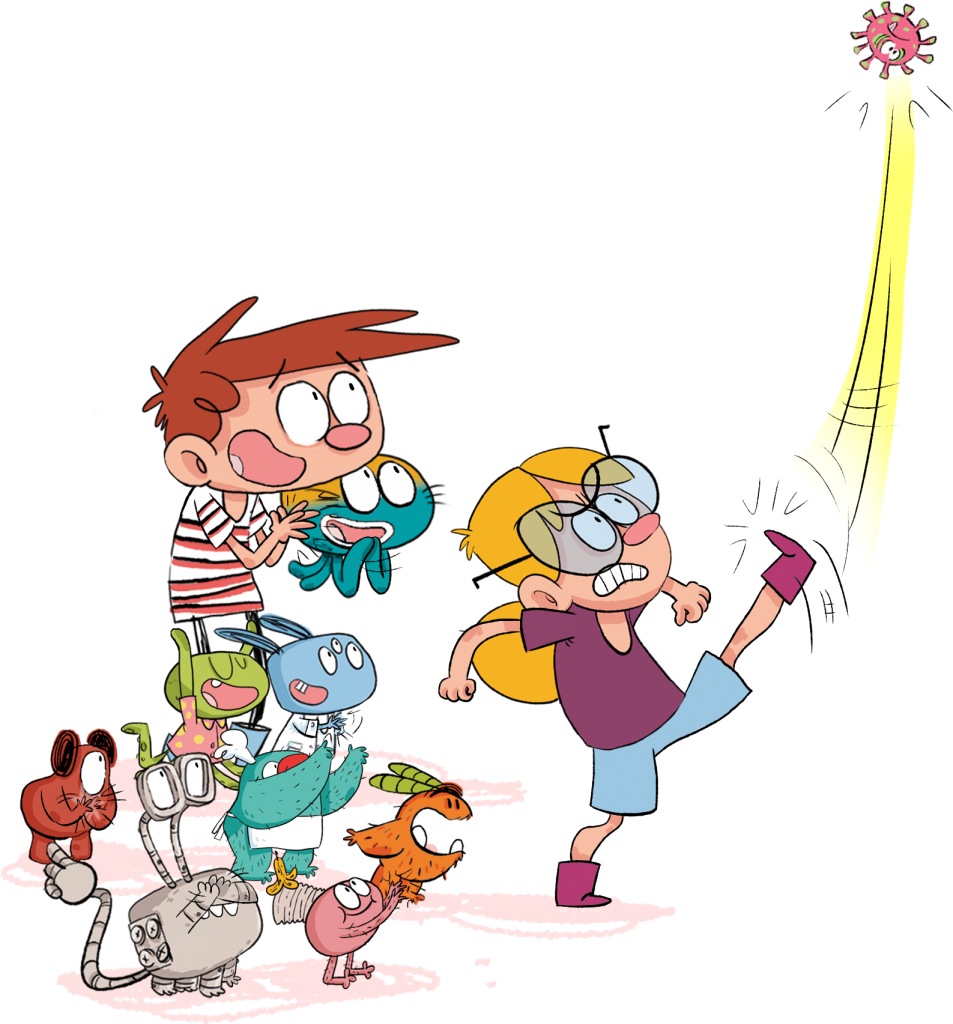
These past weeks, we have been working on a new digital book of Agus & Monsters by Jaume Copons & Liliana Fortuny in collaboration with Dr. Salvador Macip, Toni Hernández and Elena Rottier.
TOGETHER AT HOME. Coronavirus Days invites (young, or not) readers to learn to live under lockdown and subsequent lifting of the lockdown and act as heroes, helping to prevent the pandemic from spreading. As Agus says: “each of us was in our own home but we were all in the same boat”.
The digital book can be read and downloaded for free in Catalan, Spanish and English.
The aim of Combel is to invite readers to make a donation through the Kukumiku platform. Ebook can also be downloaded for € 5,00 from online platforms. 100% of the proceeds will be donated to the Kids Corona project at the Sant Joan de Déu Hospital in Barcelona. Why do children have practically no serious infections? They perhaps have the key to the treatment of COVID19…
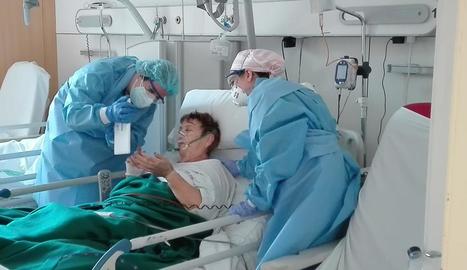
(c) TELECOMUNICAT. Electronic devices have been provided for patients to communicate with their families and friends. https://telecomunicat.cat/
Technology humanizes us. Against the repeated mantra that digital technologies ‘dehumanize’ us, it is worth remembering a project urgently developed by the Societat Catalana de Tecnologia (Institut d’Estudis Catalans). Basically, electronic devices have been provided for patients to isolated by Covid19 in Catalan hospitals to communicate with their family and friends. In moments of isolation and illness, mood is crucial and nothing like being able to talk to the people we love to try to alleviate the psychological effects of the coronavirus.
A beautiful project that you can still collaborate on! More information on the webpage!
La tecnologia ens humanitza. Contra el mantra repetit que les tecnologies digitals ens ‘deshumanitzen’, val la pena recordar un projecte desenvolupat amb urgència per la Societat Catalana de Tecnologia, filial de l’Institut d’Estudis Catalans. Bàsicament, s’ha tractat de que tots els pacients aïllats per la Covid19 en hospitals catalans tinguin accés a un dispositiu electrònic per comunicar-se amb els seus familiars i amics. En moments d’aïllament, de malaltia, és crucial l’estat d’ànim i res com poder parlar amb la gent a la que estimem per intentar pal·liar els efectes psicològics del coronavirus.
Un projecte bonic en el qual encara es pot col·laborar! Més informació al web!
La tecnología nos humaniza. Contra el mantra repetido de que las tecnologías digitales nos ‘deshumanizan’, vale la pena recordar un proyecto desarrollado con urgencia por la Societat Catalana de Tecnologia, filial del Institut d’Estudis Catalans. Básicamente, se ha tratado de que todos los pacientes aislados por la Covid19 en hospitales catalanes tengan acceso a un dispositivo electrónico para comunicarse con sus familiares y amigos. En momentos de aislamiento, de enfermedad, es crucial el estado de ánimo y nada como poder hablar con los seres queridos para intentar paliar los efectos psicológicos del coronavirus.
¡Un proyecto hermoso en el que todavía se puede colaborar! ¡Más información en la web!
(An open letter to leaders responsible for science and technology)
I have several scientific friends, some regular collaborators, who are personally and professionally blocked. These are scientists in training, some with a doctorate recently completed in 2019 and who are waiting for a response to their requests for the Juan de la Cierva or Ramón y Cajal calls, which theoretically should have been resolved before confinement, or waiting to see what It happens with various job boards of teaching and research staff from universities and research centers, also still to be resolved. Faced with uncertainty, the paralysis in decision-making is evident and regrettable.
It can be argued that their situation will not be much different from other sectors already in crisis since the quarentine official decreed in many countries. In some cases, the aggravating factor of being a practically lost generation is added: They are the crisis generation, which has already had to postpone some vital projects (emancipation, housing, children …) in the previous decade, for the sake of their profession or training. They are, however, survivors who did not abandon when others simply left it to, say, dedicate themselves to hospitality or tourism, sectors that more or less withstood the pull in the previous crisis and are now, without any doubt, on the brink of abyss. Or on it.
Too many voices are heard demanding that there be changes in this society, in its development and production models, and that it bets on added value, by strategic sectors. What if we start now? These sectors undoubtedly include research and development. And when it comes to research and development, one should not think only of virology and epidemiology, to which at the present moment, not for important but for urgent, a cyclopean effort is being devoted both in economic and human resources, in time and effort of specialists, as well as other researchers who, why not say it, have been recycled taking advantage of the pull and contributing their bit, with greater or lesser fortune, to try to get out of this dramatic and dystopian situation as soon as possible. After all, who will not now investigate in zoonosis, epidemiology or virology? Who will not seek a vaccine against the virus?
The rush is due, I reiterate, not to importance but to urgency. And also to the money that flows from high places for these investigations, or for the essential production of masks or respirators, or to the facilities in the rapid publication of results that leading scientific journals now promote, knowing that they sacrifice quality for the sake of quantity, since the more times you play the more chances there are of winning.
However, other research awaits in the brilliant minds we have confined right now. We are not betting anything on them. They are unemployed people, sometimes without benefits or income. The economies of the future will depend on their paralyzed investigations, which perhaps might seem to people as little relevant as the zoonoses a few months ago, and, why not say it, that the emergencies that appear in the coming years are resolved more or less quickly.
From the delay in the resolution of the calls that I mentioned at the beginning, among many others of private foundations – even more expectant than the public ones in risking their capital -, there is a null investment in the short term with dire consequences. It depends on this irresponsible paralysis of the governmental organisms, of the politicians and university hierarchies that should assume their functions, that the minds of the young researchers who are waiting are spoiled… Many of them, true Quixotes, although perhaps many never understand it, continue investigating alone, without resources, without salary. They do it out of passion and because they still have hope, although it seems irrational, because it is: it is something emotional.
How long should they wait? Please don’t be late. Don’t mess with their resilience. May their flame not be extinguished. Strive so that our talents do not throw in the towel. That this quarantine does not carry the future of this country and of Humanity ahead. Move. Make decisions. You charge for it.
Antoni Hernández-Fernández
Mentes confinadas en la parálisis científica
(original letter, in Spanish)
Tengo varios amigos científicos, algunos colaboradores habituales, que están bloqueados personal y profesionalmente. Se trata de científicos en plena formación, algunos con el doctorado recién terminado en 2019 y que están esperando respuesta a sus solicitudes de las convocatorias Juan de la Cierva o Ramón y Cajal, que teóricamente deberían haberse resuelto antes del confinamiento, o aguardando a ver qué sucede con diversas bolsas de trabajo de personal docente e investigador de universidades y centros de investigación, también aún por resolver. Ante la incertidumbre, la parálisis en la toma de decisiones es evidente y lamentable.
Se puede argumentar que su situación no
distará mucho de otros sectores ya en crisis desde el parón
decretado oficialmente en muchos países. En algunos casos, se añade
el agravante de ser una generación prácticamente perdida, la
generación crisis,
a la que ya le tocó postergar algunos proyectos vitales
(emanciparse, vivienda, tener hijos…) en la década anterior, en
aras de su profesión o de su formación. Son sin embargo
supervivientes que no tiraron la toalla académica cuando otros
simplemente lo dejaron para, pongamos por caso, dedicarse a la
hostelería o el turismo, sectores que más o menos aguantaron el
tirón en la crisis anterior y que ahora, sin duda, están al borde
del abismo. O en él.
Se escuchan demasiadas voces reclamando
ya que haya cambios en esta sociedad, en sus modelos de desarrollo y
productivos, y que se apueste por el valor añadido, por sectores
estratégicos. ¿Y si empezamos ahora? Entre esos sectores están,
sin duda, la investigación y el desarrollo. Y cuando se habla de
investigación y desarrollo, no se debería pensar únicamente en
virología y epidemiología, a las que en estos momentos, no por
importantes sino por urgentes, se les está dedicando un esfuerzo
ciclópeo tanto en recursos económicos como humanos, en tiempo y
esfuerzo de especialistas, así como de otros investigadores que, por
qué no decirlo, se han reciclado aprovechando el tirón y aportando
su granito de arena, con mayor o menor fortuna, para intentar salir
cuanto antes de esta situación dramática y distópica. Al fin y al
cabo, ¿quién no investigará ahora en zoonosis, epidemiología o
virología? ¿Quién no buscará una vacuna contra el virus?
El ahinco se debe, reitero, no a la
importancia sino a la urgencia. Y también al dinero que fluye desde
las altas esferas para estas investigaciones, o para la
imprescindible producción de mascarillas o respiradores, o a las
facilidades en la rauda publicación de resultados que las revistas
científicas punteras promueven ahora, sabedoras de que sacrifican
calidad en aras de cantidad, ya que cuantas más veces se juegue más
posibilidades hay de ganar.
No obstante, otras investigaciones
aguardan en las mentes brillantes que tenemos ahora mismo confinadas.
No estamos apostando nada por ellas. Son personas en paro, en
ocasiones sin prestaciones ni ingresos. De sus investigaciones,
paralizadas, que quizá podrían parecer a la población en general
tan poco relevantes como las zoonosis hace unos meses, dependerán
las economías del futuro y, por qué no decirlo, que las urgencias
que emerjan en años venideros se resuelvan con mayor o menor
celeridad y acierto.
De la dilación en la resolución de las
convocatorias que mencionaba al inicio, entre muchas otras de
fundaciones privadas -aún más expectantes que las públicas en
arriesgar su capital-, se deriva una nula inversión a corto plazo de
consecuencias nefastas. De esta parálisis irresponsable de los
organismos gubernamentales, de los políticos y jerarquías
universitarias que deberían asumir sus funciones, depende que se
echen a perder las mentes de los jóvenes investigadores que están
esperando… Muchos de ellos, auténticos quijotes, aunque ustedes
jamás lo comprendan, siguen investigando en solitario, sin recursos,
sin salario. Lo hacen por pasión y porque todavía tienen esperanza,
aunque parezca irracional, porque lo es: se trata de algo emocional.
¿Cuánto tiempo deberán esperar? Por
favor, no tarden. No jueguen con su resiliencia. Que su llama no se
apague. Esfuércense para que nuestros talentos no tiren la toalla.
Que esta cuarentena no se lleve por delante el futuro de este país y
de la Humanidad. Muévanse. Tomen decisiones. Cobran por ello.
Antoni Hernández-Fernández
Profesor de la Universitat Politècnica
de Catalunya
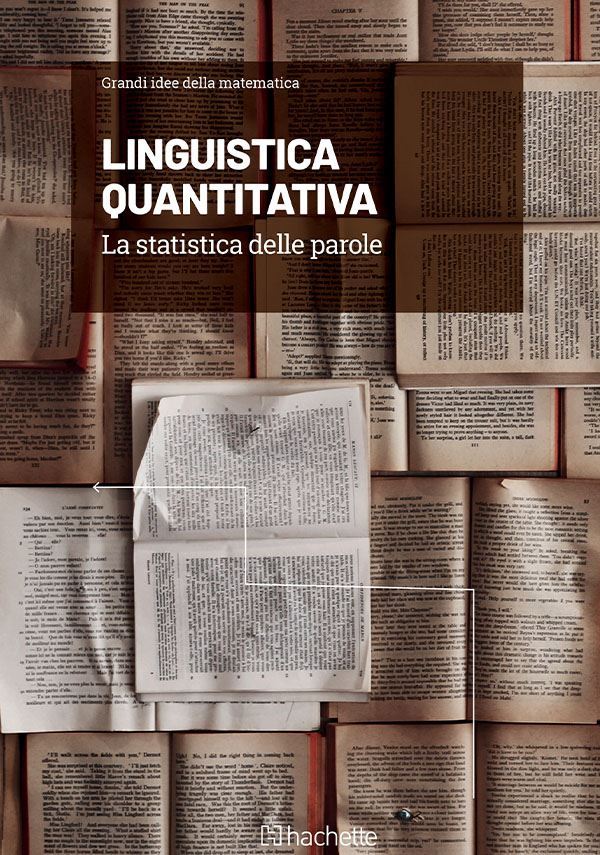
LINGUISTICA QUANTITATIVA. LA STATISTICA DELLE PAROLE –
La linguistica quantitativa è una disciplina empirica. Fa parte della linguistica matematica e ne condivide l’ansia formale, poiché pretende di stabilire leggi generali e universali che ci spieghino come funzionano le lingue. Siamo di fronte a una disciplina ambiziosa che aspira a diventare il nucleo teorico della linguistica. Quali sono le regolarità statistiche del linguaggio? Qual è la causa di queste regolarità? Questo volume ci avvicina alla risposta a queste e ad altre domande correlate.
Here you have a reading recommendation for these days … In Catalan, “Filosofia de la tecnologia” by Mario Bunge (2019). Among the possible development models, Bunge reminds us of the importance of incorporating biology and not only focusing on the economy or culture, to achieve a comprehensive model. #UPCdesdeCASA
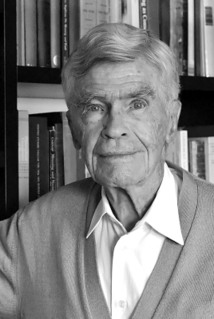
If several months ago we had the pleasure of celebrating the centenary of the physicist and philosopher Mario Bunge at the Institut d’Estudis Catalans (IEC), with the special publication of “Filosofia de la Tecnologia“(2019), for the first time in Catalan, on February 24, we had the regret of knowing his death in Montreal (Canada). Following their deep conviction, there was no subsequent ceremony. Similarly, on March 2, the Slovak linguist Gabriel Altmann, one of the fathers of Quantitative Linguistics, also died.
In less than a month I have lost two of my intellectual referents, two true humanists: Bunge & Altmann. Fortunately, we have his sublime work to accompany us: his legacy will last forever.
Mario Bunge
Gabriel Altmann
Very few scientists like them have established bridges between the Sciences and the Humanities in the last Century. Both coincided in fighting pseudoscience and in claiming to formalize the Humanities from a scientific perspective, combating scholastic dogmatisms that have hampered and delayed consolidation as a science of Linguistics, and other humanistic disciplines.
Sit tibi terra levis, Mario Bunge & Gabriel Altmann